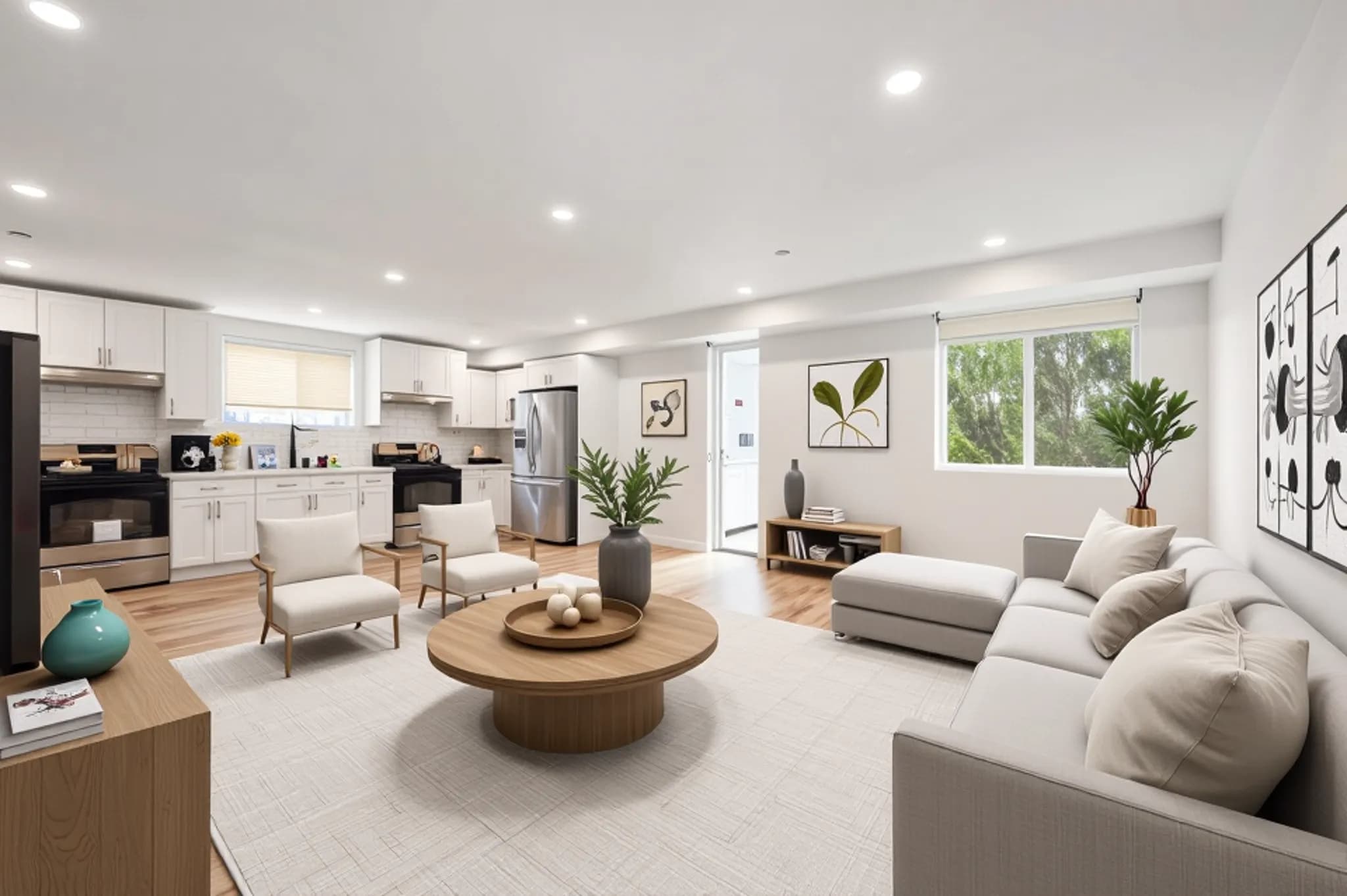
First month free on selected units!
Limited-time offer: Starting from $1049/month

USC admit letters for transfer students typically go out in April or May for fall enrollment, and in October or November for spring. That sounds like plenty of time — but the housing market near USC does not wait.
Students who receive fall transfer admission in May are already three to four months behind the on-campus planning cycle that traditional students follow. Many of the best-positioned furnished units near USC are leased well before summer begins. By the time a newly admitted transfer student starts seriously searching in June or July, the most walkable, move-in-ready units are either gone or priced at a premium.
Spring transfers face an even tighter window. Admitted in late fall, they often need to secure housing within weeks of their decision, while also managing transcript submissions, major declarations, and campus orientation logistics.
The practical lesson for every USC transfer student is simple: start your housing search as soon as you receive your admission offer, not after you have confirmed enrollment.
Many transfer students treat their USC housing search like a general apartment search — browsing Zillow, Facebook Marketplace, and Craigslist without a clear set of priorities. This approach leads to three common problems.
First, it exposes students to unfurnished apartments that require furniture, appliances, and setup time — exactly the kind of logistical burden that makes the first weeks of a new school stressful rather than exciting.
Second, it often results in leases that do not align with USC's academic calendar. A standard 12-month lease that begins in August or January can create overlap problems if a transfer's start date, lease start date, or prior school schedule does not line up cleanly.
Third, it leads students to neighborhoods that are less safe, less walkable, or farther from campus than they realize when viewing listings online. In Los Angeles, distance and neighborhood character change significantly block by block, and photos do not capture that nuance.
Housing providers that specialize in student-centered living near USC — like Moo Housing — address all three of these problems by design.
For most USC transfer students, arriving in Los Angeles means landing in a new city without a car full of furniture or a network of friends who can help you move in over a weekend. Furnished student housing near USC eliminates the setup burden entirely. A bed, desk, wardrobe, and living space that are ready from day one allow a transfer student to focus immediately on academic onboarding — buying textbooks, connecting with advisors, finding classrooms — rather than spending the first two weeks shopping at IKEA.
Moo Housing's furnished units are designed with this transition in mind. Students can move in with just their personal belongings and get settled in a day rather than a week.
Transfer students tend to be older, more academically intentional, and more independent than the average incoming freshman. Many are transferring specifically because they want a more focused, high-performance environment. Housing that offers a private bedroom — rather than a shared sleeping space — directly supports that goal.
Private bedroom co-living near USC provides the best of both worlds: personal space for studying, sleeping, and working, combined with shared common areas that create community without requiring you to sacrifice your own rhythm. Moo Housing's co-living model is built on this structure, and it is why transfer students who prioritize both independence and community find it such a natural fit.
A typical USC student who moves off campus after freshman year signs a standard 12-month lease starting in August and ending the following July. Their housing rhythm matches the academic year closely, and they often have existing roommates from on-campus life to help fill the unit.
Transfer students do not have that structure. They may be starting in January, finishing in December, or planning to stay only for the one or two years needed to complete their degree. They need lease terms that accommodate their actual timeline — not a calendar designed for students who began at USC as freshmen.
Housing providers that offer flexible lease terms, per-room leasing, and calendar-aware move-in dates reduce the friction that transfers encounter with traditional landlords who expect year-long tenancies aligned to the standard academic cycle.
For a transfer student who is simultaneously managing financial aid disbursements, new tuition bills, and the cost of settling into a new city, utility bills add an unwelcome layer of unpredictability to monthly expenses. All-inclusive housing — where electricity, water, internet, and trash are bundled into a single monthly payment — removes that unpredictability.
Moo Housing provides utilities-included units specifically because students benefit from knowing their total monthly cost before they move in. For transfer students on a tight budget or managing limited financial aid, this clarity makes a meaningful difference in how confidently they can plan.
University Park, the neighborhood immediately surrounding USC's main campus, is the most obvious choice for transfer students who want maximum walkability and campus immersion. Units in this area place students within a ten to fifteen minute walk of most academic buildings, the student union, the USC Village, and many of the cafes and dining spots that become part of a student's daily routine.
For transfer students who are building their USC social network from scratch, living close to the heart of campus accelerates that process. Running into classmates, joining study groups at nearby coffee shops, and attending campus events all become easier when you are steps from where everything happens.
USC's Department of Public Safety (DPS) patrol zone covers the University Park area, providing an additional layer of security monitoring that many students and families specifically seek out when evaluating housing options. Moo Housing properties are positioned within or near the DPS zone, which is a consistent priority for transfer students and their families when making housing decisions.
Just south of USC's campus, the Exposition Park neighborhood and the Figueroa corridor offer housing options that are slightly more affordable than the blocks immediately adjacent to campus while still providing practical walking or biking access. Transfer students who are managing tighter budgets without wanting to sacrifice proximity often find strong options in this area.
The neighborhood is served by Metro lines and local transit that connect students to Downtown LA, Koreatown, and other parts of the city — useful for students who have internship placements or professional engagements outside the immediate campus area.
For USC transfer students who are older, more independent, or arriving for graduate-level programs, Koreatown offers a vibrant, well-connected neighborhood approximately two miles from USC's campus. Rent in Koreatown tends to be more competitive than in University Park, and the area is dense with restaurants, grocery stores, cafes, and transit access.
Transfer students who are comfortable with a short bus or bike commute — and who prioritize living in a neighborhood with genuine urban energy — often find Koreatown a compelling alternative to the immediate campus perimeter. Moo Housing serves students in the Koreatown area, extending its student-focused housing model to this popular alternative location.
Moo Housing has worked with USC students across multiple enrollment profiles — freshmen, upperclassmen, graduate students, and international students — but the transfer student experience has shaped several of the decisions that define how Moo Housing operates.
Transfer students need housing that is ready immediately, not housing that requires weeks of logistics. Moo Housing's furnished units are move-in-ready from the first day of a lease, reducing the lag between arrival and feeling settled.
Transfer students benefit from knowing their total costs up front. Moo Housing's all-inclusive pricing model means that a student sees their monthly payment clearly before signing — no hidden utility estimates, no surprise fees mid-semester.
Transfer students often arrive without an existing local network. Moo Housing's co-living model creates a natural community of fellow students who are navigating similar transitions, which accelerates the kind of social connection that transfers often find harder to build than students who began at USC as freshmen.
And transfer students need housing providers who understand the USC calendar and leasing cycle — not landlords who treat student tenants like general market renters. Moo Housing's entire model is built around the needs of students at USC, which means their leasing team understands admission timelines, academic calendars, and the specific pressure points that affect transfer students in ways that general LA landlords simply do not.
Begin researching neighborhoods and housing types before you have even confirmed enrollment. The earlier you understand your options, the better position you will be in when you are ready to commit.
Contact student-focused housing providers directly and ask about availability for your intended move-in date. Moo Housing's leasing team can discuss options and hold-date logistics early in the process.
Schedule virtual tours or in-person visits if you are in Los Angeles. Review lease terms carefully, paying close attention to move-in date flexibility, included utilities, furnished versus unfurnished status, and per-room versus whole-unit leasing structure.
Avoid signing anything that locks you into a start date or financial commitment that does not align with your actual arrival date.
Confirm your lease, arrange your move-in logistics, and communicate with your housing provider about any specific needs for your arrival — especially if you are arriving from out of state or internationally. Moo Housing's team works with students to make this transition as smooth as possible.
Transferring to USC is an achievement. It reflects academic effort, intentionality, and the decision to pursue a more ambitious educational path. The housing experience that follows should support that momentum — not create friction, confusion, or financial uncertainty.
USC transfer student housing is a distinct challenge, and it deserves a distinct approach. Furnished units, flexible leases, private bedrooms, utilities-included pricing, and a student-focused community are not extras — they are the features that allow transfer students to hit the ground running at USC rather than spending their first weeks managing housing logistics.
Moo Housing is designed for exactly this kind of student. If you are transferring to USC and want to discuss your housing options, reach out to the Moo Housing leasing team at (213) 325-5858 or visit moohousing.com to explore available units near campus.

Every year, hundreds of students transfer into the University of Southern California from community colleges, four-year universities, and international institutions. They arrive motivated, ready to perform academically, and eager to build a new chapter in Los Angeles. But almost immediately, most encounter the same unexpected obstacle: finding housing on an unfamiliar timeline, in an unfamiliar city, without the on-campus orientation that incoming freshmen receive. USC transfer student housing sits in a difficult middle ground. Transfers are generally ineligible for freshman dorm assignments, yet they often lack the network of upper-class USC students who know which neighborhoods to target and which landlords to trust. They are also frequently arriving mid-semester, between academic years, or with shorter lead times than students who have been planning their off-campus move for months. The result is a housing search that is more compressed, more uncertain, and more consequential than most transfers anticipate. Getting it right — or wrong — directly affects academic focus, mental health, and overall adjustment to USC and Los Angeles. This guide is designed specifically for USC transfer students. It covers what to look for, when to start, which neighborhoods make sense, and why certain housing formats work better for transfers than standard apartment leases.

Every year, hundreds of students transfer into the University of Southern California from community colleges, four-year universities, and international institutions. They arrive motivated, ready to perform academically, and eager to build a new chapter in Los Angeles. But almost immediately, most encounter the same unexpected obstacle: finding housing on an unfamiliar timeline, in an unfamiliar city, without the on-campus orientation that incoming freshmen receive. USC transfer student housing sits in a difficult middle ground. Transfers are generally ineligible for freshman dorm assignments, yet they often lack the network of upper-class USC students who know which neighborhoods to target and which landlords to trust. They are also frequently arriving mid-semester, between academic years, or with shorter lead times than students who have been planning their off-campus move for months. The result is a housing search that is more compressed, more uncertain, and more consequential than most transfers anticipate. Getting it right — or wrong — directly affects academic focus, mental health, and overall adjustment to USC and Los Angeles. This guide is designed specifically for USC transfer students. It covers what to look for, when to start, which neighborhoods make sense, and why certain housing formats work better for transfers than standard apartment leases.

Every year, hundreds of students transfer into the University of Southern California from community colleges, four-year universities, and international institutions. They arrive motivated, ready to perform academically, and eager to build a new chapter in Los Angeles. But almost immediately, most encounter the same unexpected obstacle: finding housing on an unfamiliar timeline, in an unfamiliar city, without the on-campus orientation that incoming freshmen receive. USC transfer student housing sits in a difficult middle ground. Transfers are generally ineligible for freshman dorm assignments, yet they often lack the network of upper-class USC students who know which neighborhoods to target and which landlords to trust. They are also frequently arriving mid-semester, between academic years, or with shorter lead times than students who have been planning their off-campus move for months. The result is a housing search that is more compressed, more uncertain, and more consequential than most transfers anticipate. Getting it right — or wrong — directly affects academic focus, mental health, and overall adjustment to USC and Los Angeles. This guide is designed specifically for USC transfer students. It covers what to look for, when to start, which neighborhoods make sense, and why certain housing formats work better for transfers than standard apartment leases.